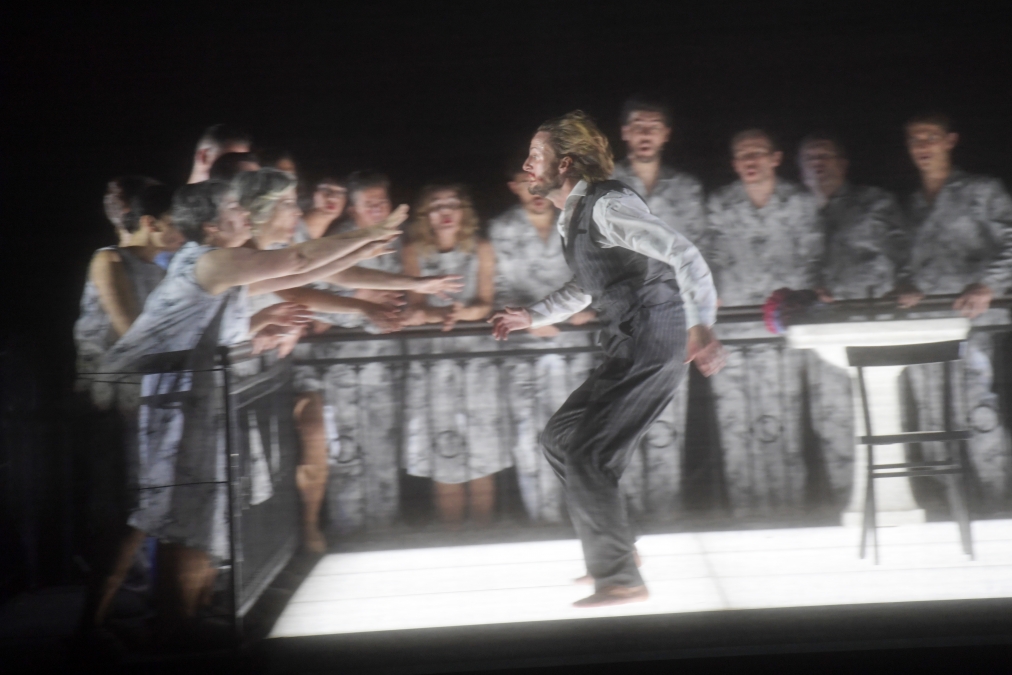
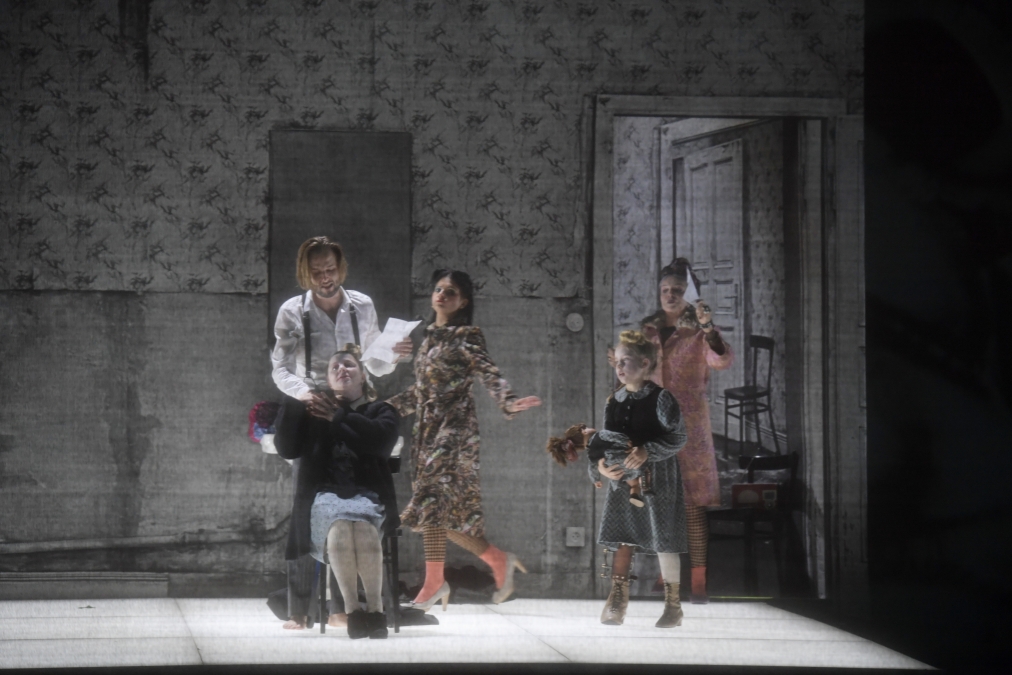
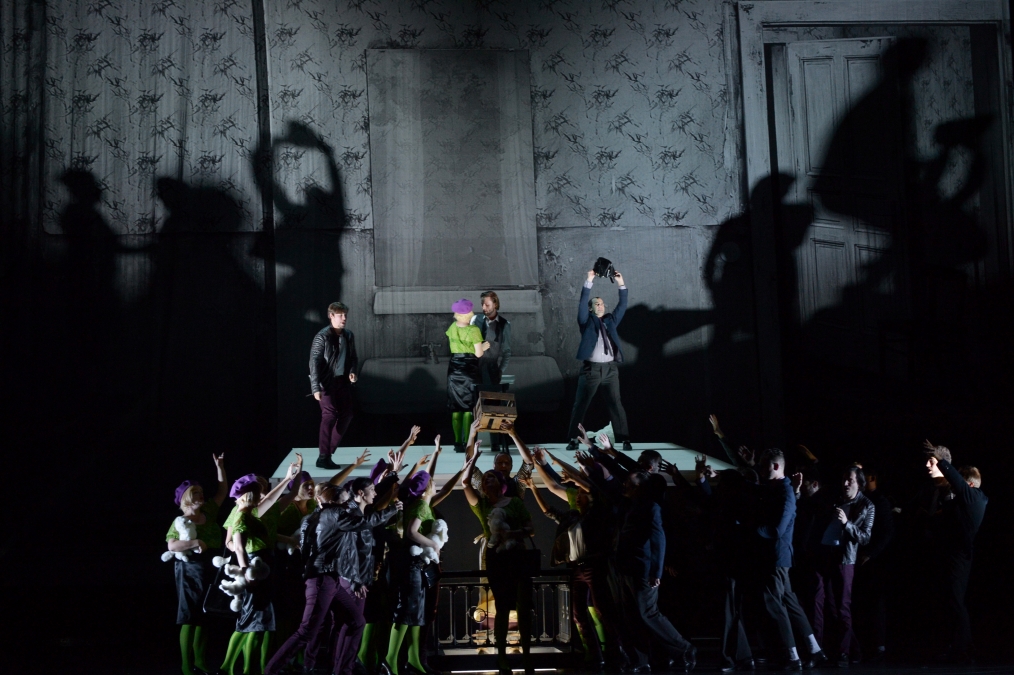
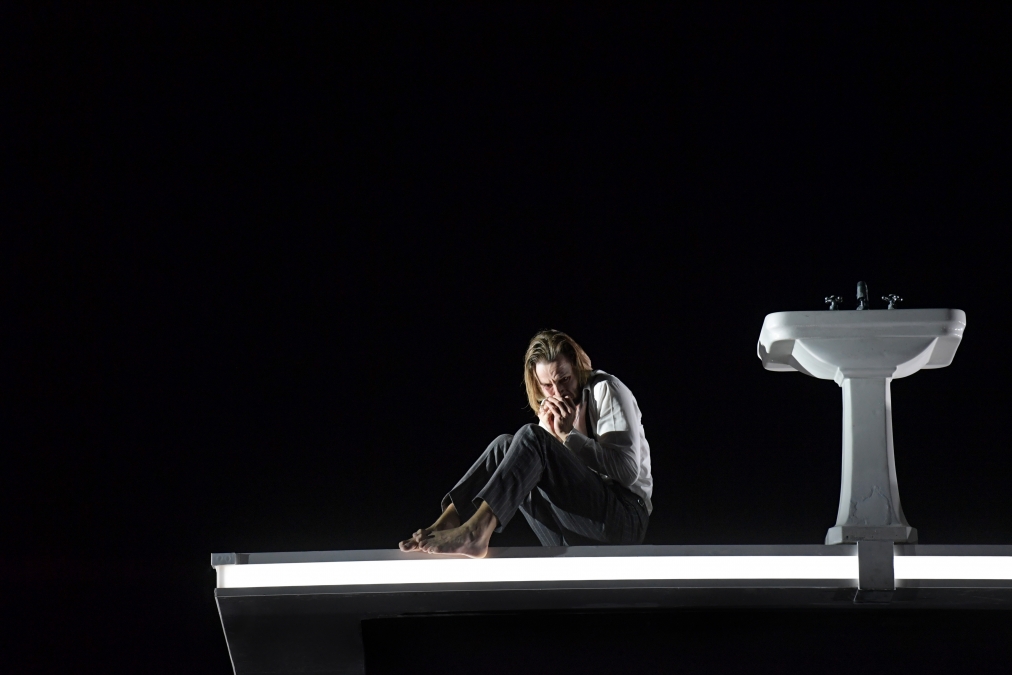
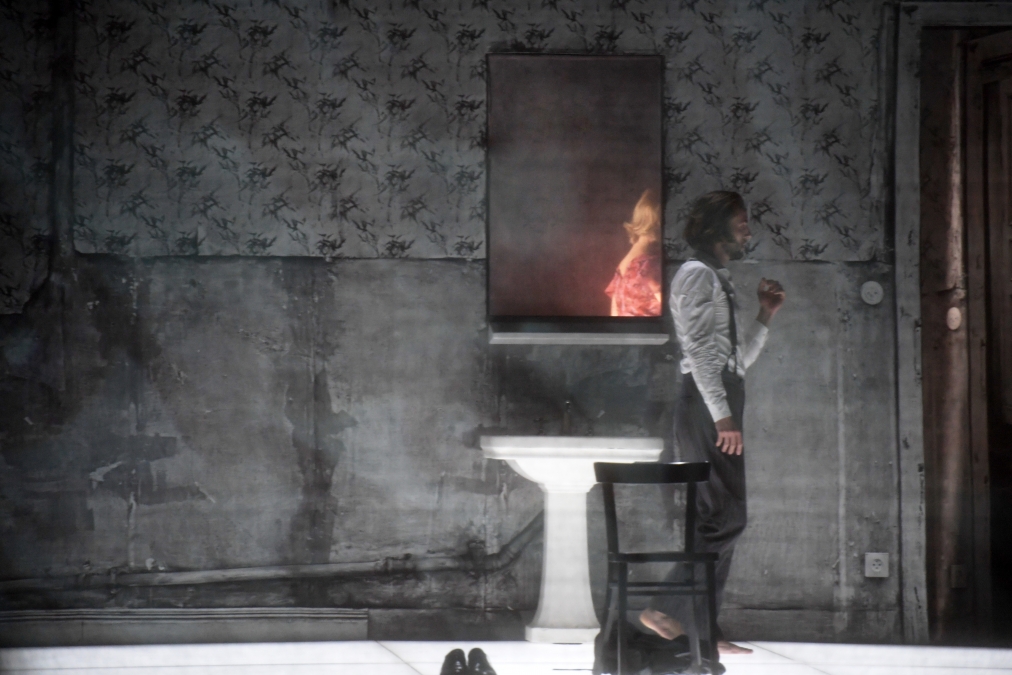
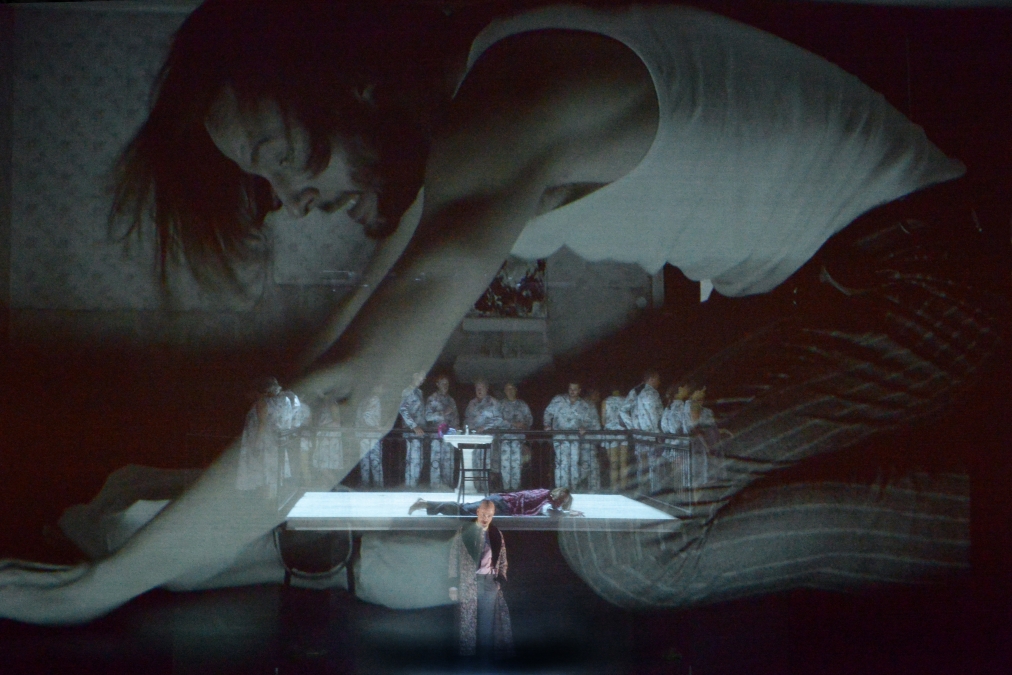
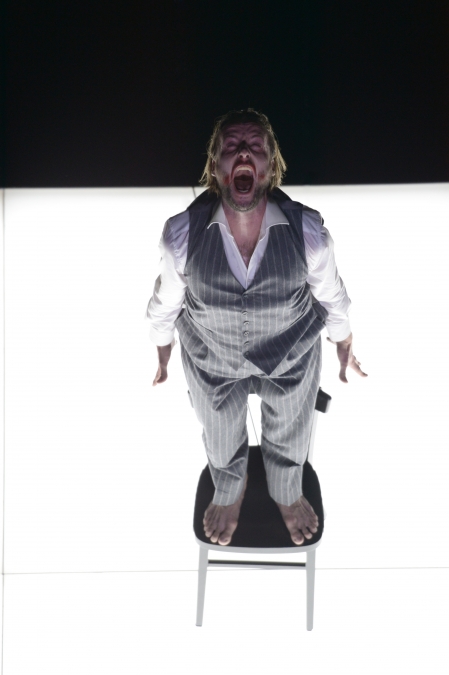
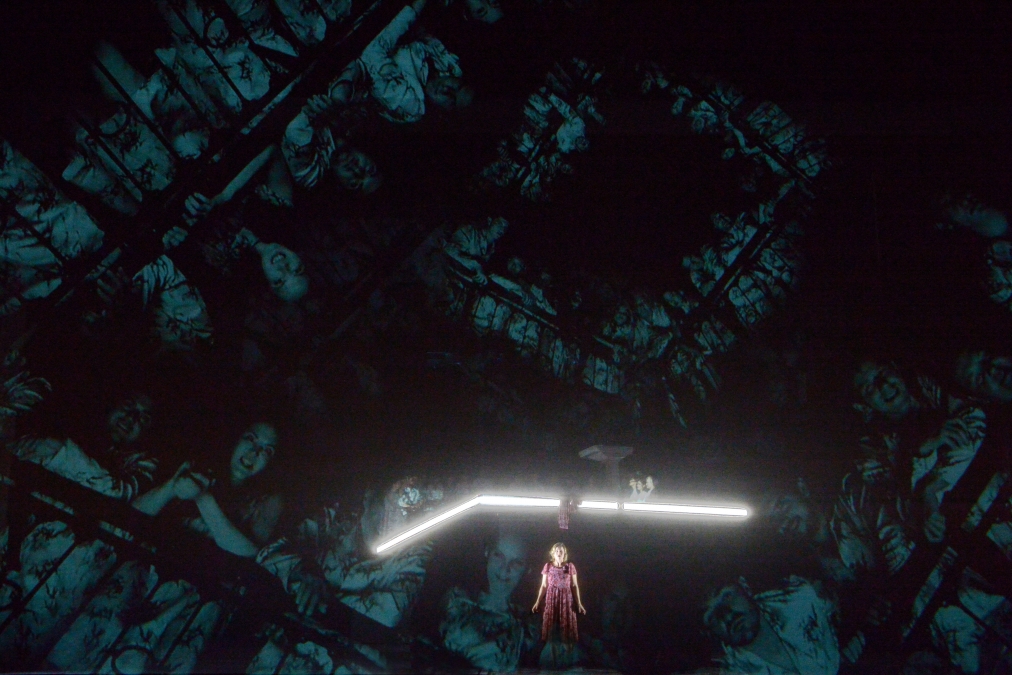
Accommodation is scarce. The house-keeper (Frau Bach) and owner of the building (Herr Zenk) show Georg a room he wants to rent. The woman who had lived there jumped out of the window. Traces of her suicide are still visible. Pieces of glass are all over the floor. Georg sits in the café opposite. The previous tenant was known there. The waiter (Herr Ingo) starts trying to persuade Georg to have the same predilections as the dead woman (cigarettes, hot chocolate). Georg turns them down, but is ignored. Georg has invited some friends round to his new flat. The visitors find the story of the previous tenant and her furniture very interesting. They make themselves comfortable. The more they drink the more tumultuous their conversation becomes. An infuriated neighbour (Herr Kögel) knocks on the door and immediately starts using vile language to complain to Georg about the noise. After Kögel's abrupt departure Georg is left intimidated and disturbed about the severity of scene. He begs his friends to leave immediately, which they do, under protest. The sound of a dripping tap can be heard. Georg is alone in his flat and still shaken by his neighbour's behaviour. He makes sure that all is quiet and promises himself not to make a sound. A woman appears to Georg, and sings to him. It is the woman who lived in Georg's flat. In the morning after his party Georg meets Herr Zenk, who reminds him bluntly of the rules of the house. He finishes by advising him – as the previous tenant had done– to wear felt slippers. A neighbour knocks. Frau Greiner tells Georg that signatures are being collected because she is supposed to have made too much noise. She is frightened. Georg is in the Café. Herr Ingo brings the „wrong things“, cigarettes and hot chocolate. Georg is puzzled, but says nothing. Körner and Krell scare Georg with the description of a murder which they read from a newspaper. Somebody was shot dead by a neighbour because he was too loud. It was meant as a joke, but frightens Georg even more. Frau Dorn and Frau Bach come to Georg with the petition to get Frau Greiner thrown out. Who exactly Frau Greiner really is becomes less and less clear during the conversation: the two women maintain she has a son, but Georg had only seen her with a deaf and dumb daughter. Georg refuses to sign because he can't accuse the woman, who he might not know at all, of anything. Frau Dorn and Frau Bach fly into a rage and they begin to insult Georg and threaten him. Alone in his flat he curses the unspeakable neighbourhood. A woman appears to Georg for a second time. Georg now wears women's clothes and make-up. The knocking at the door is now a violent hammering, mixed with noises made by workmen repairing the glass roof. Reality strikes home: Georg realises that he is wearing women's clothes. The neighbours and workmen mock him. A parade is heard outside, gradually getting nearer. It has a sluggish, giddy, unreal character. For Georg it conjures up the approach of an untangible threat – coming at him from the outside world. The parade flows seemlessly into the threatening ranks. Georg is losing his own identity. He and Johanna are in his room, which gradually closes around them. They are trapped. The other protagonists are outside the room. After a barrage of threats, Georg's transformation into Johanna is complete. Georg is now Johanna. Johanna sings a third song, as Georg/Johanna. Falling from the window is a memory, the present and future. The mob gathers before Johanna's window. Johanna must jump. She crashes through the repaired glass roof. She survives, badly injured. She slowly climbs the stairs, to jump a second time. Johanna jumps from the window again. This event – with real, physical destruction – has now arrived in the present time.